Understanding Trauma in Legal Contexts
A Free Lunch and Learn Medico-legal Series
PsycIME is pleased to provide access to the recordings of our free online webinars throughout the months of February and March, including a presentation by Allison Forsyth, 2-time Olympian and 8-time Canadian champion.
This in depth series will feature informative sessions on compassion fatigue, organizational trauma, chronic sleep deprivation, and trauma-informed lawyering.
To access on-demand videos of past webinars, please fill out the form on this page, and the sessions will display once the form is submitted.
Complete this form to get access to the Videos.
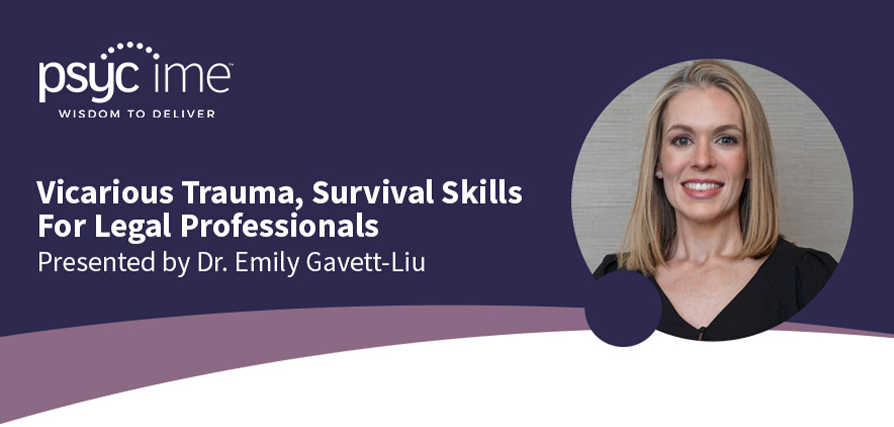
Vicarious Trauma, Survival Skills for Legal Professionals
Presented by: Dr. Emily Gavett-Liu
Date: Wednesday, March 11, 2026
This webinar examines the forms, mechanisms, and risk factors of secondary trauma in legal professionals—including vicarious trauma, compassion fatigue, burnout, and moral injury—highlighting neurobiological effects, profession-specific vulnerabilities, and key warning signs of distress. It also outlines evidence-based individual and organizational strategies to prevent and mitigate secondary trauma, with a focus on workplace culture, systemic interventions, and building sustainable professional resilience.
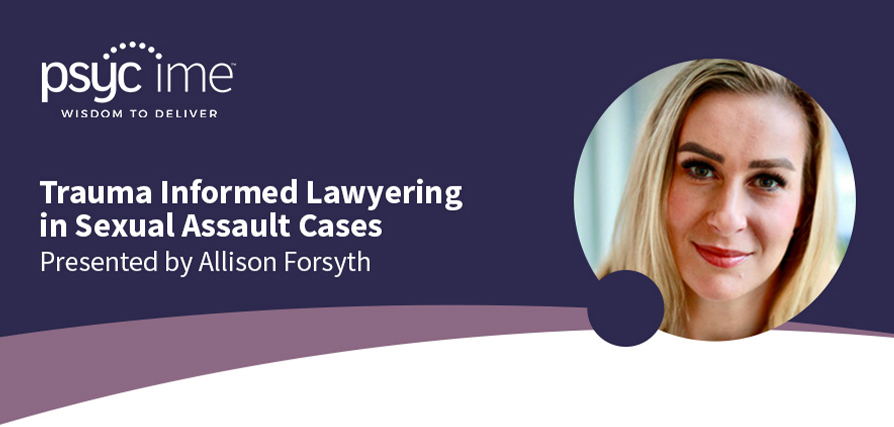
Trauma Informed Lawyering in Sexual Assault Cases
Presented by: Allison Forsyth
Date: Wednesday, February 25, 2026
Allison is a 2-time Olympian and 8-time Canadian Champion in alpine skiing. Her career is now as a “Safe Sport” expert, advocate, and professional, and she was recently named one of Canada’s Top 25 Women of Influence.
By the end of this session, participants will be able to apply trauma-informed, survivor-centered principles to legal practice by understanding how trauma affects memory, disclosure, credibility, emotional regulation, and decision-making, enabling ethical and effective interviewing, testimony preparation, and courtroom advocacy that builds trust, preserves procedural fairness, and avoids re-traumatization.
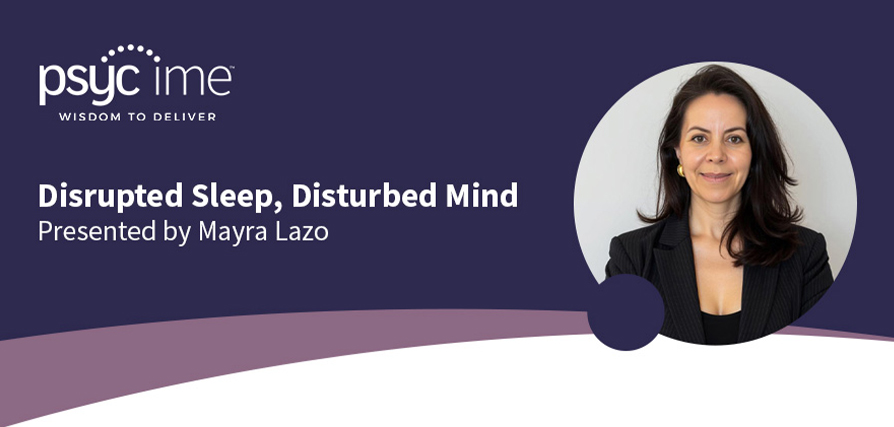
Disrupted Sleep, Disturbed Mind
Presented by: Dr. Mayra Carlos Lazo
Date: Wednesday, February 18, 2026
This webinar examines the neurobiological and psychiatric foundations of chronic sleep disturbance, including its relationship to trauma, pain, and comorbid mental illness, to clarify causation and pathways to impairment. It also addresses how to evaluate credibility, treatment adequacy, and functional impact by integrating subjective reports, objective sleep measures, and current clinical practice guidelines.
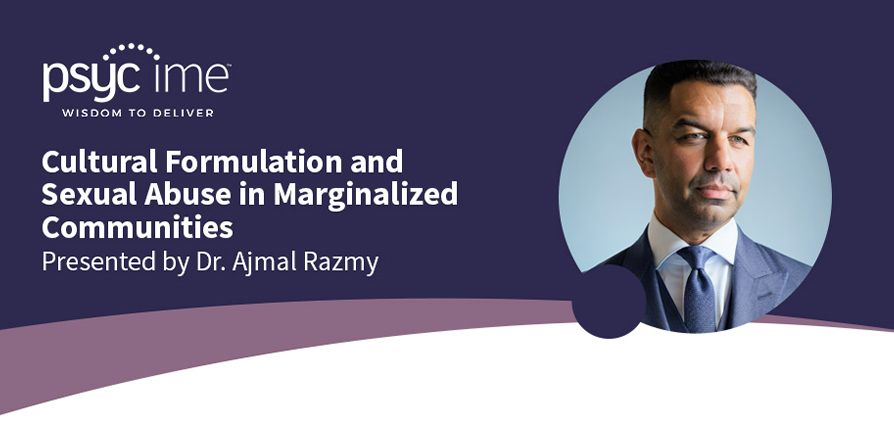
Cultural Formulation and Sexual Abuse in Marginalized Communities
Presented by: Dr. Ajmal Razmy
Date: Wednesday, February 11, 2026
This webinar introduces the DSM-5 cultural formulation and examines how culture shapes the experience, meaning, and disclosure of sexual abuse, with particular attention to Indigenous and other marginalized populations. It demonstrates how culturally informed psychiatric and legal assessment can meaningfully alter opinions about diagnosis, credibility, capacity or consent, and the extent of harm.
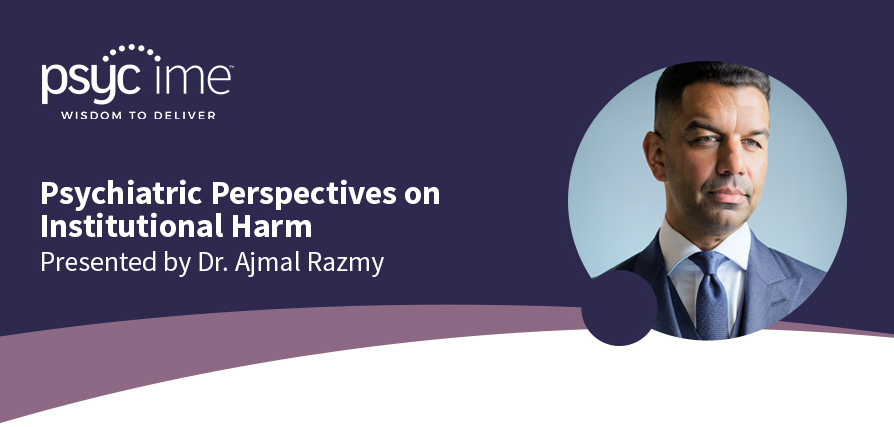
Psychiatric Perspectives on Institutional Harm
Presented by: Dr. Ajmal Razmy
Date: Friday, February 6, 2026
This webinar examines how military and first-responder organizational cultures can compound sexual abuse into organizational trauma with lasting psychiatric and functional effects. It applies a trauma-informed, systems-aware lens to understanding symptoms, disclosure, and key legal questions such as credibility, causation, and damages.
Vicarious Trauma, Survival Skills for Legal Professionals
Presented by: Dr. Emily Gavett-Liu
Date: Wednesday, March 11, 2026
This webinar examines the forms, mechanisms, and risk factors of secondary trauma in legal professionals—including vicarious trauma, compassion fatigue, burnout, and moral injury—highlighting neurobiological effects, profession-specific vulnerabilities, and key warning signs of distress. It also outlines evidence-based individual and organizational strategies to prevent and mitigate secondary trauma, with a focus on workplace culture, systemic interventions, and building sustainable professional resilience.